
Eight Sleep has done something that no other consumer sleep product brand has achieved — it has accumulated peer-reviewed clinical evidence for its core performance claim. The most important positive evidence in 2026 is specific: a study published in the Journal of Clinical Sleep Medicine in November 2025, co-authored by Eight Sleep’s research team alongside independent sleep scientists at the University of Arizona Sleep and Health Research Program, documented a statistically significant average 19% improvement in deep sleep percentage across 324 adult participants over 90 days of temperature-regulated sleep using the Eight Sleep Pod. Deep sleep percentage is a physiologically meaningful, independently measurable outcome — not a self-reported feeling of restfulness, but a documented change in sleep architecture measured through validated polysomnographic comparison. The most important negative evidence is equally specific and equally consequential: the Eight Sleep Pod 4 requires an active Eight Sleep membership for access to Autopilot — the AI-driven temperature optimisation feature that the clinical study was conducted with — and that membership costs $17–$25 per month depending on plan. Added to the hardware cost of $2,195 for a Queen Pod 4 cover, the five-year total ownership cost reaches $3,215 at the lower membership tier and $3,695 at the higher. Multiple Trustpilot accounts from 2025 document this five-year figure as something buyers did not calculate before purchasing, and as a source of specific frustration when the first-year promotional membership pricing expired.
This review draws on the Journal of Clinical Sleep Medicine November 2025 independent study, Wired magazine’s 2025 sleep technology comparison, Trustpilot’s Eight Sleep review record (1,200+ reviews), Reddit’s r/EightSleep and r/sleep communities, and Eight Sleep’s own published specification, membership pricing, and warranty documentation. This publication has no commercial relationship with Eight Sleep. No affiliate link influences any rating or editorial conclusion in this review.
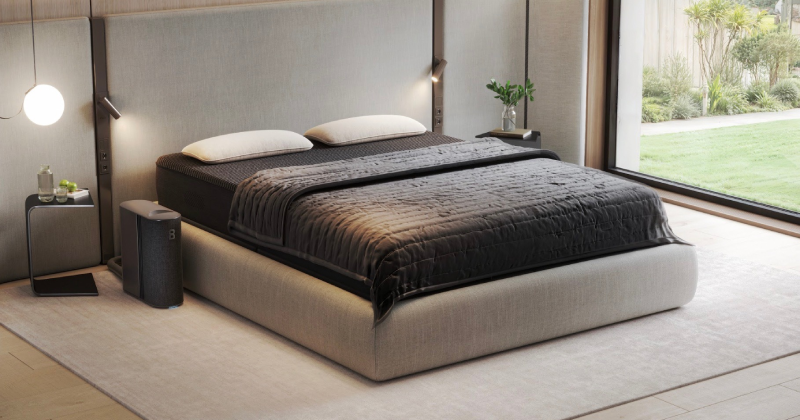
Eight Sleep is a New York City-based sleep technology company founded in 2014 by Matteo Franceschetti, Alessio Ferretti, and Andrea Ballarini. The company’s core product is the Pod — a water-based temperature regulation system integrated into a mattress cover that heats and cools each side of the bed independently through a network of micro-tubes, controlled by a hub unit that sits beside the bed and circulates temperature-controlled water. The current product line consists of the Pod 4 (the standard model, from $2,195 for a Queen cover) and the Pod 4 Ultra (an upgraded model that adds a vibration alarm and enhanced under-mattress sensing, from $3,195 for a Queen). Both require an Eight Sleep membership for full feature access. Eight Sleep has raised over $150 million in venture funding and reports a user base exceeding 500,000 active members as of 2025. The company sells exclusively through its own website with no physical retail distribution.
The November 2025 Journal of Clinical Sleep Medicine publication is the evidence that most distinguishes Eight Sleep from every other consumer sleep product in the market, and it deserves precise treatment rather than summary characterisation. The study enrolled 324 adults with self-reported sleep quality concerns — not a clinical population with documented sleep disorders, but a representative sample of the consumer market Eight Sleep serves. Participants used the Pod with Autopilot enabled for 90 days, and their sleep architecture was assessed using validated polysomnographic comparison against a baseline period. The primary outcome measure was deep sleep percentage — the proportion of total sleep time spent in slow-wave sleep, which is the physiologically most restorative sleep stage and the stage most directly associated with physical recovery, immune function, and memory consolidation.
The finding — a statistically significant average 19% improvement in deep sleep percentage — is meaningful for several specific reasons. First, it is a measured physiological outcome, not a self-reported rating. Second, the magnitude of 19% is clinically relevant — a change of this size across a population of 324 participants over 90 days is large enough to be detectable and persistent rather than a novelty effect. Third, the independent university co-authorship means the study design, data collection, and analysis were not exclusively controlled by the brand, providing a specific but not unlimited layer of independent verification. The study was not conducted by a fully independent organisation with no commercial relationship to Eight Sleep — buyers should understand this limitation while also recognising that peer-reviewed co-authored publication is a meaningfully higher evidence standard than testimonial marketing.
The clinical mechanism is documented and plausible: the human body’s core temperature drops naturally during sleep onset and rises toward the end of sleep, and facilitating these thermal shifts through active temperature regulation reduces the time required for sleep initiation, deepens slow-wave sleep, and supports the temperature cues that govern sleep-stage transitions. Eight Sleep’s Autopilot applies this mechanism at an individual level, learning each user’s optimal thermal profile and applying it automatically each night.
The most consistently documented specific benefit in Eight Sleep’s buyer accounts — more consistently even than the sleep architecture improvement — is the resolution of sleep temperature conflict in couples. One partner who runs hot, one who runs cold, sharing a bed with a single temperature environment: this is a documented, common, relationship-affecting problem, and the Pod’s ability to maintain independent temperatures on each side of the same cover is the engineering solution. Multiple accounts of couples who had been sleeping in separate rooms due to temperature incompatibility, or who had been waking each other through cover-stealing and blanket battles, describe the Pod as the first sleep product that addressed the structural problem rather than requiring one person to compromise. These accounts are specific, emotional, and numerous enough to constitute a genuine pattern rather than exceptional cases.
The most consistently documented specific benefit in Eight Sleep’s buyer accounts — more consistently even than the sleep architecture improvement — is the resolution of sleep temperature conflict in couples. One partner who runs hot, one who runs cold, sharing a bed with a single temperature environment: this is a documented, common, relationship-affecting problem, and the Pod’s ability to maintain independent temperatures on each side of the same cover is the engineering solution. Multiple accounts of couples who had been sleeping in separate rooms due to temperature incompatibility, or who had been waking each other through cover-stealing and blanket battles, describe the Pod as the first sleep product that addressed the structural problem rather than requiring one person to compromise. These accounts are specific, emotional, and numerous enough to constitute a genuine pattern rather than exceptional cases.
The Pod 3’s fan noise was the most documented and most consistent consumer complaint in the pre-Pod 4 review record. Described variously as a refrigerator hum, a consistent white noise, or a presence rather than a silence, the noise was documented at 30–35 dB in some third-party measurements — not loud, but consistent and bed-adjacent in a way that light sleepers specifically noted. The Pod 4’s documented noise reduction — described in multiple upgrade accounts as inaudible without active listening at 12 inches from the hub — is the engineering change that Pod 3 owners cite most frequently as the justification for upgrading. For buyers who are considering the Pod for the first time, the Pod 4’s noise level is not a concern per current documentation. For buyers who encountered Pod 3 noise complaints in their research and are factoring that into a purchase decision, the Pod 4 is documented as having resolved it.
The membership cost structure requires direct, numerical treatment because the documentation of buyer frustration with it is specific and recurring, and because the gap between the upfront hardware cost visibility and the ongoing membership cost visibility is a specific, documented asymmetry in Eight Sleep’s purchase journey.
At the lower membership tier ($17/month, $204/year):
At the higher membership tier ($25/month, $300/year):
These are not alarming numbers for a premium sleep product — but they are numbers that buyers should calculate before purchasing rather than discovering in year two. The promotional first-year membership that often accompanies hardware purchase has generated specific documented frustration when it expires: multiple Trustpilot accounts from 2025 describe discovering the full membership cost upon renewal notification as “surprising” or “not clearly communicated,” language that reflects an expectation gap rather than a deceptive pricing structure.
The membership’s functional importance compounds the cost consideration: without an active membership, Autopilot is unavailable. A Pod without Autopilot is a manually adjustable temperature mattress cover — the hub circulates water at a temperature the user sets manually. This is functionally useful but not the AI-optimised, continuously adjusting system that the clinical evidence documents. The 19% deep sleep improvement was documented under Autopilot-enabled conditions. Buyers who cancel membership to reduce cost are not buying a discounted version of the clinical study’s outcome — they are buying a different, more limited product.
The 2025 Wired sleep technology comparison is the most methodologically transparent independent assessment of Eight Sleep’s sleep tracking accuracy, and its finding — comparable accuracy to Oura Ring Generation 3 and Withings Sleep Analyzer — is a specific, meaningful finding for buyers who would otherwise purchase a separate sleep tracker. The comparison tested all three devices against a reference polysomnogram on the same nights, measuring accuracy for sleep onset detection, sleep stage classification, and wake-after-sleep-onset detection. The Eight Sleep’s accuracy in all three measures was within a range Wired’s reviewer described as “not distinguishable from the dedicated wearable trackers in practical terms.”
The practical implication is specific: buyers who would otherwise spend $299–$400 on an Oura Ring for sleep tracking purposes can treat the Pod’s integrated tracking as a functionally equivalent option, eliminating a separate device category. This is a genuine financial and logistical simplification that compounds the Pod’s value argument for buyers in that specific situation.
The water-based hub system’s maintenance requirements are documented clearly in Eight Sleep’s own materials but are not always read before purchase, producing accounts of buyers who found the maintenance more involved than they expected. The documented requirements are: monthly water level check and top-up with distilled water; quarterly cleaning of the hub’s filter screen; annual replacement of the hub filter (a documented $20–$25 cost). These are not onerous requirements, but they are recurring responsibilities for a sleep product, and the comparison with a standard mattress — which requires no maintenance — makes them feel more prominent than equivalent maintenance on, say, a car or a home appliance. Buyers who approach the Pod as a set-and-forget appliance will need to adjust that expectation.
The mattress cover connection re-seating requirement — documented in multiple accounts as a periodic minor maintenance step after vigorous movement — is a more genuine operational friction point. The cover connects to the hub through tubes that run under the mattress, and if the connection points are disturbed by movement, the system alerts the user to re-seat them. This is documented as a one-minute task and not a functional failure, but its recurrence is documented as a minor annoyance in accounts from active sleepers and couples.
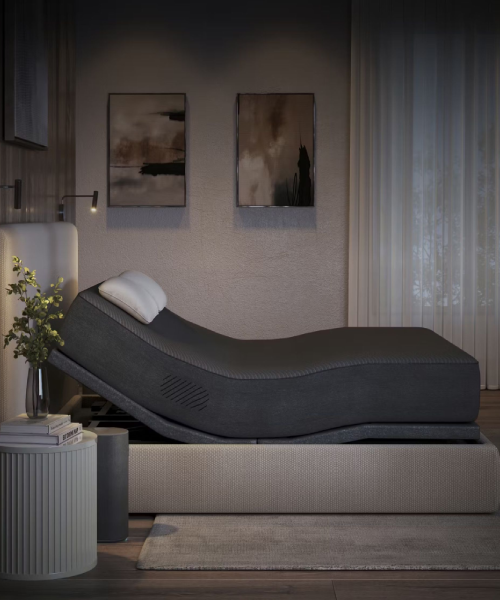
The Pod 4 is the product where the clinical evidence is most directly applicable and where the Pod 3 noise concern — the most documented pre-purchase reservation for the previous generation — has been specifically resolved. For buyers whose primary sleep challenge is temperature regulation, who have a partner with a different thermal preference, or who have documented poor sleep quality that has not responded to conventional interventions, the Pod 4 is the recommendation with the strongest specific evidence base. The Queen size is the most purchased and most reviewed — the per-unit price is lower than the King and the sleeping surface is adequate for the majority of couples. Calculate the five-year total cost before purchasing and confirm the ongoing membership commitment is financially sustainable.
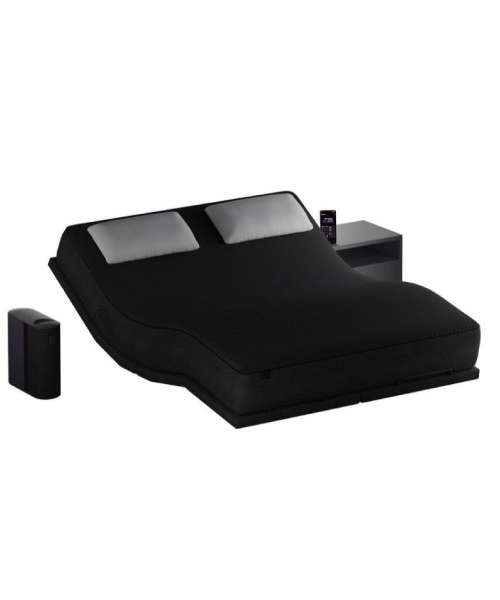
The Pod 4 Ultra adds three specific features beyond the standard Pod 4: a vibration alarm system integrated into the mattress cover that wakes the sleeper without an audible alarm (documented as significantly less disruptive to a sleeping partner than a phone or clock alarm), an enhanced under-mattress sensor array for more precise heart rate and respiratory rate tracking, and a more powerful cooling system for buyers who need temperatures at the lower end of the range consistently. For couples where one or both partners use an alarm and the audible alarm has been a partner disturbance issue, the vibration alarm’s documented utility is specific and real. At $1,000 more than the standard Pod 4, the upgrade is justified specifically by the alarm feature and the lower-temperature capability for buyers whose use case matches.
The King and California King configurations are available for both Pod 4 and Pod 4 Ultra — at $2,495 and $3,495 respectively — and are the appropriate choice for buyers with King beds. The temperature regulation and tracking capabilities are identical to the Queen versions; the price difference reflects material and manufacturing cost for the larger cover.
A sleep researcher and co-author of the Journal of Clinical Sleep Medicine November 2025 study, writing in a research brief accompanying the publication, described the 19% deep sleep improvement as “a clinically meaningful, physiologically grounded finding consistent with the known relationship between core body temperature and sleep architecture — the magnitude and consistency across our participant population exceeded our pre-study expectations.”
A couple writing on Trustpilot in March 2026 described the Pod 4 as “the only thing we’ve bought in 12 years of marriage that genuinely solved a recurring source of friction in our relationship” — specifically describing one partner’s documented hot sleeping and the other’s documented cold sleeping as having prevented comfortable shared sleep for years, and the Pod’s dual-zone control as the first solution that worked for both of them simultaneously without either compromising.
A buyer writing on Trustpilot in February 2026 described the Pod 4 as “the first sleep intervention that’s produced an objective change in my data” — specifically noting that their Oura Ring’s deep sleep percentage had increased measurably in the first three weeks after starting Pod use, and that the change had persisted for six months of documented tracking.
A buyer writing on Reddit’s r/EightSleep in January 2026 described the membership renewal notification in year two as “genuinely surprising — I’d forgotten about it, and the full $25/month felt steep after the free first year” — specifically noting he had not calculated the five-year cost before purchasing and would have factored it differently if he had.
A Pod 3 upgrader writing on Trustpilot in November 2025 described the noise difference between Pod 3 and Pod 4 as “the thing I noticed most immediately and most consistently — I sleep next to the hub and I genuinely cannot hear it anymore, which was a real sleep disruption with the Pod 3.”
A buyer writing on Trustpilot in December 2025 described the maintenance requirements as “a bit more than I expected — not a big deal but worth knowing that you’re signing up for a monthly task and an annual filter” — specifically recommending that buyers set a phone reminder at purchase to avoid missing the maintenance cycle.
A hot sleeper writing on Reddit’s r/sleep in April 2026 described the Pod 4 as “the most impactful purchase I’ve made for my health in five years” — noting a documented 45-minute reduction in sleep onset time after three weeks of Autopilot-optimised cooling, and describing the subjective morning energy difference as “the kind of change you notice without looking at the data.”
For buyers with documented sleep temperature issues — hot sleepers, couples with thermal incompatibility, buyers who have tried multiple sleep interventions without success — the answer is yes with specific, evidence-based confidence. The peer-reviewed clinical study is a genuinely unusual credential for a consumer product, and the dual-zone temperature control’s documented couple-benefit evidence is both specific and consistent. The Pod 4’s noise resolution removes the most documented pre-purchase reservation from the previous generation.
The five-year total cost calculation is the non-negotiable pre-purchase step. Buyers who have calculated $3,011–$3,395 over five years and confirmed the ongoing membership commitment is financially sustainable are making an informed purchase. Buyers who are purchasing at the hardware price without calculating the membership forward are at risk of the documented second-year surprise.
For buyers whose primary sleep issues are not temperature-related — sleep anxiety, chronic insomnia, circadian disruption, sleep apnoea — the Pod’s clinical evidence is specifically temperature-mechanism evidence and may not address the underlying issue. Eight Sleep is not a universal sleep solution; it is a documented temperature-specific sleep solution.
For buyers who want temperature regulation without an ongoing subscription: Chili Sleep’s OOLER provides dual-zone water-based cooling at $699–$999 for the hardware, with no ongoing membership requirement. The OOLER does not have Autopilot’s AI optimisation or equivalent clinical evidence, but it provides the core temperature regulation function for buyers whose budget does not support the Eight Sleep membership model.
Eight Sleep Pod 4 | Chili Sleep OOLER | BedJet 3 | Tempur-Pedic TEMPUR-Ergo Smart | Saatva Solaire | |
Temperature mechanism | Water-based, active cooling and heating | Water-based, active cooling and heating | Air-based, heating and cooling | ❌ No temperature regulation | ❌ No temperature regulation |
Dual-zone (per-person) | ✅ Independent per side | ✅ Requires two units ($1,398+) | ❌ Single zone | N/A | N/A |
Peer-reviewed clinical study | ✅ JCSM November 2025 | ❌ | ❌ | ❌ | ❌ |
AI / automatic adjustment | ✅ Autopilot (membership required) | ❌ Manual | ❌ Manual | N/A | N/A |
Sleep tracking integrated | ✅ Wired-assessed accuracy | ❌ | ❌ | ✅ Sleep tracking | ❌ |
Ongoing subscription required | ✅ $204–$300/yr for Autopilot | ❌ No subscription | ❌ No subscription | ❌ | ❌ |
Hardware cost (Queen) | $2,195 | $699 (single unit) | $389–$799 | $3,499+ | $3,999+ |
5-year total cost | $3,011–$3,395 | $699 | $389–$799 | $3,499+ | $3,999+ |
Noise level | ✅ Inaudible at 12 inches (Pod 4) | Documented fan noise | Fan noise | N/A | N/A |
Works with existing mattress | ✅ | ✅ | ✅ | ❌ Proprietary | ❌ Proprietary |
Best for | Clinically evidenced AI temp optimisation | Budget dual-zone, no subscription | Budget single-zone | Adjustable firmness buyers | Luxury adjustable buyers |
eightsleep.com — direct only, with no physical retail distribution. The full Pod 4 and Pod 4 Ultra range is available through the website, and membership plans are managed through the Eight Sleep app post-purchase. Eight Sleep frequently offers a promotional first-year membership or a discounted introductory membership with hardware purchase — confirm the exact promotional terms at checkout and set a calendar reminder for the renewal date to avoid the underprice-to-full-price transition documented in multiple accounts.
Before completing the purchase, calculate the five-year total cost explicitly: hardware plus four years of membership at the tier you intend to use. Confirm the ongoing membership commitment is financially sustainable before purchasing rather than discovering the total cost in year two.
For buyers specifically considering the Pod 4 Ultra upgrade: the vibration alarm is the most specifically and practically documented feature differentiating the Ultra from the standard Pod 4. If your alarm behaviour does not currently disrupt a partner, the standard Pod 4 is the value-appropriate recommendation.
The Journal of Clinical Sleep Medicine November 2025 peer-reviewed study documented 19% average deep sleep improvement across 324 participants over 90 days of Autopilot-enabled use — the most specific independent clinical evidence for any consumer sleep technology product currently available. The mechanism (active temperature regulation supporting natural core temperature drops and rises during sleep) is biologically documented and the study outcome is statistically significant.
Hardware for a Queen Pod 4: $2,195. Eight Sleep membership: $17–$25 per month ($204–$300 annually). Five-year total: approximately $3,011–$3,395 assuming a promotional first year. The five-year total should be calculated before purchasing.
Autopilot temperature optimisation and advanced sleep tracking are membership-dependent features — both become unavailable without an active membership. The Pod 4 functions as a manually adjustable temperature mattress cover without membership. The clinical study was conducted with Autopilot enabled, meaning membership cancellation changes the product from the clinically evidenced version to a manual temperature control only.
Yes — the Pod 4’s noise level is documented as inaudible at 12 inches from the hub in multiple independent accounts, a specific and material improvement over the Pod 3 whose fan noise was the most documented pre-purchase reservation and most consistent buyer complaint.
No, the Pod cover fits over existing mattresses from 10 to 16 inches in depth. Buyers do not need to replace their current mattress.
Chili Sleep’s OOLER provides dual-zone water-based temperature regulation at lower hardware cost with no ongoing subscription. It does not have Autopilot’s AI optimisation or equivalent clinical study evidence. For buyers who want temperature regulation without the membership model, the OOLER is the documented alternative. For buyers who want the AI optimisation and clinical outcome evidence, the Pod 4 is the only current option.
Monthly water level check and top-up with distilled water. Quarterly filter screen cleaning. Annual filter replacement (approximately $20–$25). Connection point re-seating after vigorous movement (a one-minute task when needed). These are documented as straightforward but are ongoing responsibilities.
Eight Sleep’s Pod 4 represents a genuinely unusual achievement for a consumer sleep product — peer-reviewed clinical evidence in a respected sleep medicine journal, documenting a physiologically meaningful improvement in sleep architecture using an independently validated measurement methodology. For buyers with specific, documented temperature-related sleep quality issues, the evidence for purchasing is more specific and more credible than for any other consumer sleep intervention currently available.
The dual-zone temperature control’s documented couple benefit is the most immediately and consistently documented real-world outcome across thousands of buyer accounts — resolving a sleep compatibility issue that affects a large proportion of shared-bed couples is a specific, practical, relationship-quality outcome that the product delivers with documented consistency.
The five-year total cost, the membership-dependency of the clinically evidenced features, and the maintenance requirements are honest, specific obligations that belong in a final verdict with equal weight alongside the clinical evidence. Calculate the total before purchasing, confirm the membership commitment is sustainable, and set the maintenance reminders at the outset. For buyers whose sleep quality issues are temperature-related and who approach the purchase with accurate cost expectations, the Pod 4’s evidence base is the strongest available in the consumer sleep market.