If you are comparing bus travel options in the US, OurBus is one of the more interesting names to look at. It is not just selling seats on a bus. It is selling a smoother booking experience, flexible trip management, live tracking, and a more modern take on short-to-medium distance travel.
What makes OurBus stand out is its model. The company positions its routes around rider demand, with an emphasis on minimal-stop service, affordable fares, and amenities people actually care about, like Wi-Fi, charging ports, and digital boarding. That gives it a more tech-forward feel than many traditional intercity bus brands.
After reviewing the current service, policies, and customer-facing features, my take is this: OurBus is a very solid option for travelers who value convenience, live updates, and route flexibility, especially in busy East Coast and Midwest corridors. It is not flawless, and like most bus platforms it still depends heavily on route quality and day-of-travel execution, but the overall proposition is stronger than many people expect.
OurBus presents itself as a modern bus-booking platform focused on comfortable, affordable trips and digital convenience. Its model is built around customer demand, with the goal of creating minimal-stop service and a better rider experience.
In practical terms, OurBus is known for three main things: a smoother digital booking flow, a decent onboard amenity baseline, and flexibility features like live tracking and trip changes. It also extends beyond plain intercity rides with commuter products, charter rentals, and Door<To>Door connections.
Who is OurBus for? Mostly travelers who want something more convenient than old-school bus booking without paying train or flight prices. It especially fits students, Northeast corridor travelers, airport travelers, and people moving between suburbs, cities, and college towns.
Booking is one of OurBus’s strongest areas. The company pushes mobile ticketing, digital boarding, live bus tracking, and app-based trip management. Route pages also make schedules and starting fares fairly easy to scan, which helps casual travelers compare departure options quickly.
The network looks respectable rather than huge. The company positions itself as serving hundreds of destinations, but it still feels more selective than the biggest bus brands. That means coverage can be excellent on the right routes, but not universally strong everywhere.
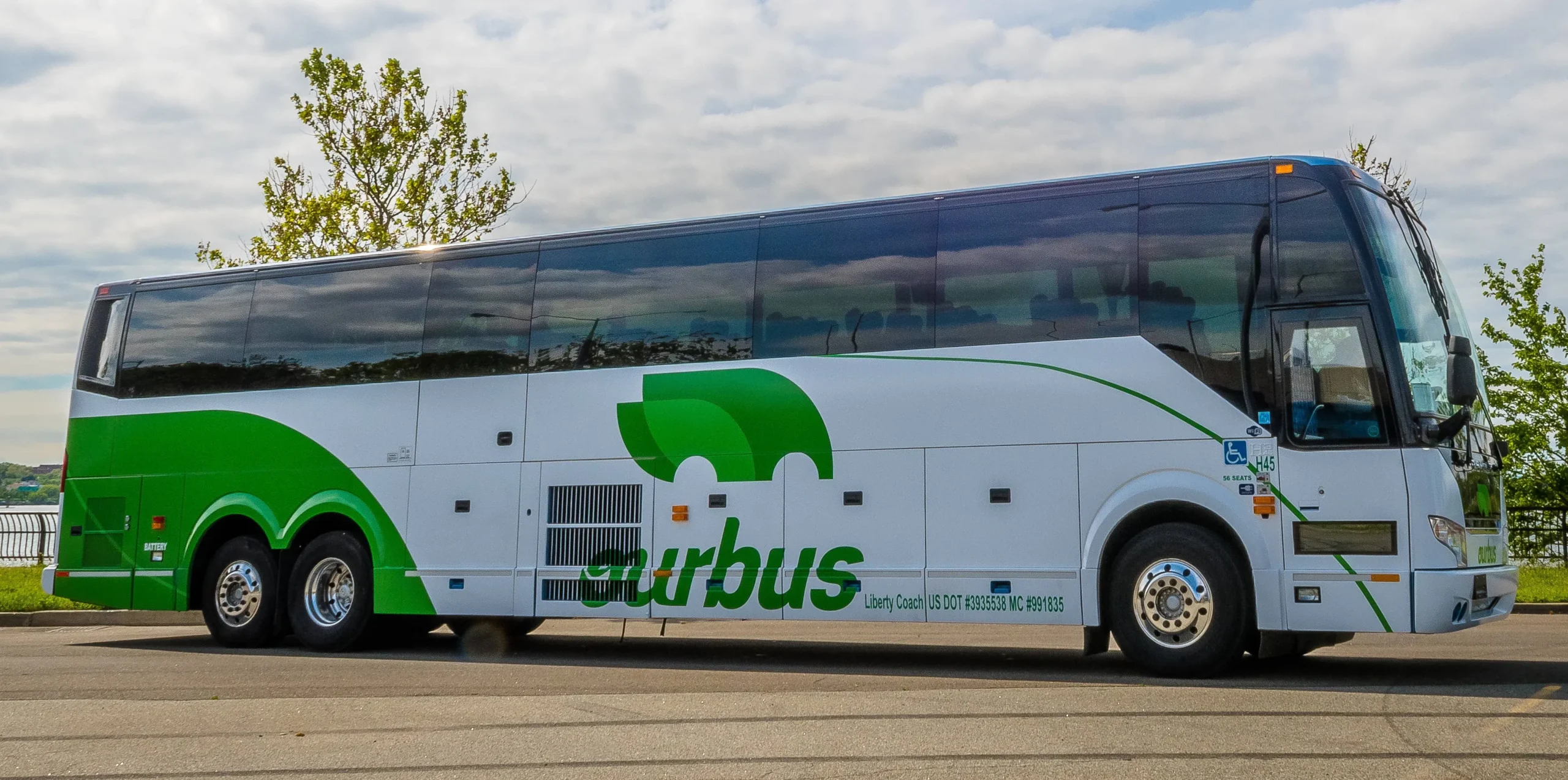
OurBus has a solid standard amenity list for this category. The company says trips typically use modern charter-style buses with Wi-Fi, restrooms, reclining seats, power outlets, bottled water, and tracking technology. That is a strong baseline and honestly covers most of what riders care about.
It also helps that the company sets somewhat realistic expectations. For example, Wi-Fi quality can vary because it depends on route conditions and signal coverage. That kind of detail makes the service feel more credible.
This is where OurBus becomes more appealing. The company says you can often cancel or rebook up to 60 minutes before departure. In some cases, cancelled trips are refunded as wallet credit rather than cash, and booking or facility fees may not be returned.
That means the flexibility is real, but not totally simple. My view is that OurBus is often more convenient than older bus services on changes and rebooking, but travelers still need to read route-specific rules carefully, especially when partner operators are involved.
OurBus says customer support is available through chat, email, and phone. On paper, that is a reassuring setup because bus travelers often care most about support when a trip is delayed, changed, or disrupted.
The company also provides accessibility guidance and asks riders to request disability accommodations in advance. That is a good sign because it suggests some attention to real-world travel needs beyond basic booking.
I like that OurBus feels built around actual rider frustrations. Live tracking, digital boarding, route updates, and flexible trip management all make the service feel more modern than a lot of legacy bus experiences. I also like that the brand has expanded beyond standard intercity rides into Door<To>Door and commuter services.
The main weakness is consistency. Like most bus services, the experience still depends heavily on route execution, timing, and support quality when something goes wrong. Also, some of the flexibility messaging sounds very simple on the homepage, but the actual policy details are a bit more nuanced.
OurBus positions itself as affordable, and that feels fair. On some corridors, the fares can be very competitive. But value still depends on route, timing, and availability, so the best way to think about it is as often competitive rather than always cheapest.
The broad customer picture appears fairly positive. The strongest themes are easy booking, decent value, useful app-based updates, and a generally smoother experience than some people expect from bus travel.
The most common positive themes seem to be straightforward booking, reasonable pricing, acceptable onboard comfort, and the convenience of digital ticketing. The negative themes are also familiar for this category: delays, route-level inconsistency, and frustration when support does not fully resolve a problem during a disrupted trip.
A few recurring customer sentiment patterns, paraphrased:
Yes. OurBus looks like a legitimate and established travel service. It has a live booking platform, published FAQs, formal luggage and cancellation policies, accessibility guidance, contact channels, and visible route coverage.
For the right traveler, yes.
If you want affordable intercity travel with a modern booking experience, live tracking, and better-than-minimum amenities, OurBus is worth serious consideration. It is especially attractive for repeat riders who can benefit from commuter options or the SuperSaver Pass. If your top priority is the absolute biggest network, a larger competitor may be better.
| Category | OurBus | FlixBus | Who Wins |
|---|---|---|---|
| Booking feel | App-first, live tracking, digital boarding, route-demand focus | Easy app booking with a larger global system | Tie |
| Network scale | Meaningful US coverage, but more selective | Much broader network overall | FlixBus |
| Flexibility | Good route-change convenience on many trips | Strong options, but policies vary | Close |
| Onboard basics | Wi-Fi, water, outlets, restroom, reclining seats | Wi-Fi, outlets, luggage space, common intercity basics | Tie |
| Best for | Corridor travelers who want convenience and flexibility | Travelers who prioritize scale and wider coverage | Depends on your trip |
FlixBus wins clearly on sheer size. But OurBus feels more tailored to specific US travel pain points, especially app-based convenience, live tracking, and last-mile style solutions like Door<To>Door.
OurBus does offer meaningful savings tools. The clearest one is the SuperSaver Pass for repeat riders. The brand also promotes route-level deals and commuter-focused value in certain markets.
The main way to book is through the OurBus website or app. The whole service is clearly built around web and mobile booking with digital boarding as part of the standard experience.
OurBus is one of the better modern bus-travel options in the US right now. The service feels more thoughtful than many people expect from this category: the booking flow is clean, the amenity set is solid, and features like Door<To>Door and repeat-rider savings make the platform feel more complete than a simple ticket seller.
It is not perfect. Network breadth is still narrower than the biggest rivals, and like any bus company, real-world delays and route-level inconsistency can affect the experience. But if your route is served and the timing works for you, OurBus is easy to recommend.