
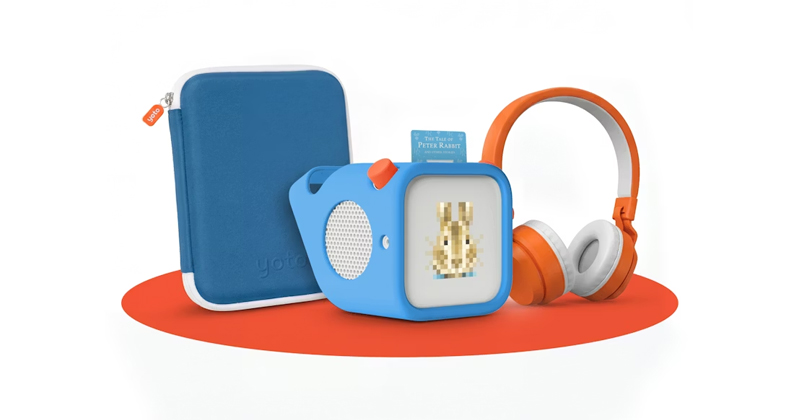
If you’re considering a Yoto review before buying, the big question is whether Yoto is genuinely useful for family life or just a stylish alternative to handing your child a tablet. On its official site, Yoto frames itself as a screen-free audio platform built around stories, music, learning, podcasts, radio, and routines that children can control independently.
That positioning makes sense. The current Yoto ecosystem includes the larger Yoto Player, the smaller Yoto Mini, a huge card library, a custom-content feature called Make Your Own, and a membership program called Yoto Club that adds discounts and app-based listening. The brand also leans hard into “no microphone, no camera, no ads,” which is a major part of the appeal for parents trying to reduce screen dependence without removing entertainment altogether.
In this review, I looked at the things that matter most in real homes: durability, ease of use, travel-friendliness, bedtime usefulness, content flexibility, return and warranty coverage, and what customers consistently say after living with the product. I also pulled five official Yoto products and packs from the brand’s own site to represent the strongest current lineup for new buyers.
My testing criteria for this Yoto review focused on six practical areas: hardware quality, independence for kids, content flexibility, travel usability, bedtime value, and ownership costs over time. I also paid close attention to policy details, because with a kids’ tech product, warranty coverage, returns, and known safety issues matter just as much as features.
Yoto was founded by Ben and Filip, two dads with music-industry backgrounds who wanted a screenless device that could support independent play without relying on addictive screen habits. The company says the idea was influenced in part by Montessori principles and by the tension many families feel between convenience and too much screen time.
What Yoto is known for is giving kids physical control over audio through cards and chunky button-based hardware. The broader promise is that one device can serve a child from early childhood into later elementary years, with content spanning songs, read-alongs, bedtime audio, educational cards, podcasts, soundscapes, and even user-made playlists.
Who is Yoto for? Mostly families who want lower-friction, screen-free entertainment that kids can operate themselves. It is especially appealing for bedtime routines, quiet time, road trips, and kids who like repeat listening. It is less compelling if your child mainly wants a toy-first experience or if you do not expect to build out a content library over time.
Yoto’s hardware pitch is clear: kid-friendly, simple, and built for repeated use. Both the Yoto Player and Yoto Mini emphasize tactile controls, physical cards, and an ad-free environment with no microphone or camera. The larger Yoto Player adds stereo sound, a night light, a room thermometer, and up to 24 hours of battery life, while the Yoto Mini goes smaller and more portable with up to 14 hours of battery life in the 2024 edition.
From a practical standpoint, the hardware looks more thoughtfully designed than many kids’ gadgets. Yoto also sells protective accessories like the Adventure Jacket and Yoto Mini Travel Case, which suggests the brand understands that these devices will be handled roughly, packed into bags, and carried by children.
Key Features:
The feature set is better than it first appears:
For me, Make Your Own is one of Yoto’s biggest advantages. The official site says each blank card can store up to 100 tracks or 500MB of audio and can be edited as often as you want. That makes Yoto much more flexible than a closed toy ecosystem.
In everyday life, Yoto looks strongest in three situations: bedtime, independent listening, and travel. The larger Yoto Player is clearly positioned as the home-base device, with stereo sound, a night light, room temperature monitoring, sleep sounds, and a more bedroom-friendly footprint. The Yoto Mini is the easier travel companion, with a smaller build, headphone support, Bluetooth speaker function, and accessories built for carrying it around.
It also helps that Yoto’s age range is broad. Officially, the company markets the Yoto Player for ages 3–12+ and says the content library runs from birth to 12+, while Yoto Mini is also designed around the same larger childhood journey. That makes the system feel more expandable than many toddler-first products.
Ease of use is where Yoto earns a lot of goodwill. The whole interaction model is “insert, press, twist.” Kids choose a card, pop it in, press buttons for free audio, and twist to control volume or move through chapters. That is a much better independence story than asking young children to navigate a touchscreen interface.
The app still matters, but more for setup and parental controls than for everyday listening. Yoto describes the app as the place to manage settings, customize the family experience, and connect custom content. That is the right balance: the parent gets control in the app, while the child gets control on the device.
Ownership is fairly straightforward, but there are a few things to note. The official guarantee covers most Yoto products for 24 months and memory storage issues for 48 months, which is a solid warranty setup for a kids’ audio device.
The bigger caveat is consistency around returns. The legal refund policy says players, cards, packs, and Yoto accessories can be returned within 30 days if undamaged and complete, while the player product pages advertise “60 day fuss free returns.” The delivery-and-returns page adds that return shipping is covered in some cases for items over $20 in certain regions. In other words, the returns story is decent, but not presented as cleanly as it could be.
There is also an important safety footnote: Yoto is still running a battery replacement program for affected Yoto Mini devices manufactured between 2021 and 2023 because of a small number of overheating reports. The current Yoto Mini is the 2024 edition, but secondhand buyers should absolutely verify which version they are getting.
At the time of review, the official site lists the Yoto Player at $109.99 and the Yoto Mini at $79.99. Make Your Own Cards – Pack of 10 is $29.99, and both the Starter Pack for Little Kids and Starter Pack for Big Kids are $24.99. Yoto Club starts from $4.99 per month and offers discounts on 850+ cards plus 150+ hours of app listening.
So is it good value? For the right family, yes. If you just want a one-time audio toy, Yoto is not the cheapest route. If you want a reusable platform your child can grow with, and you like the idea of building a library over time, the value case is much stronger.
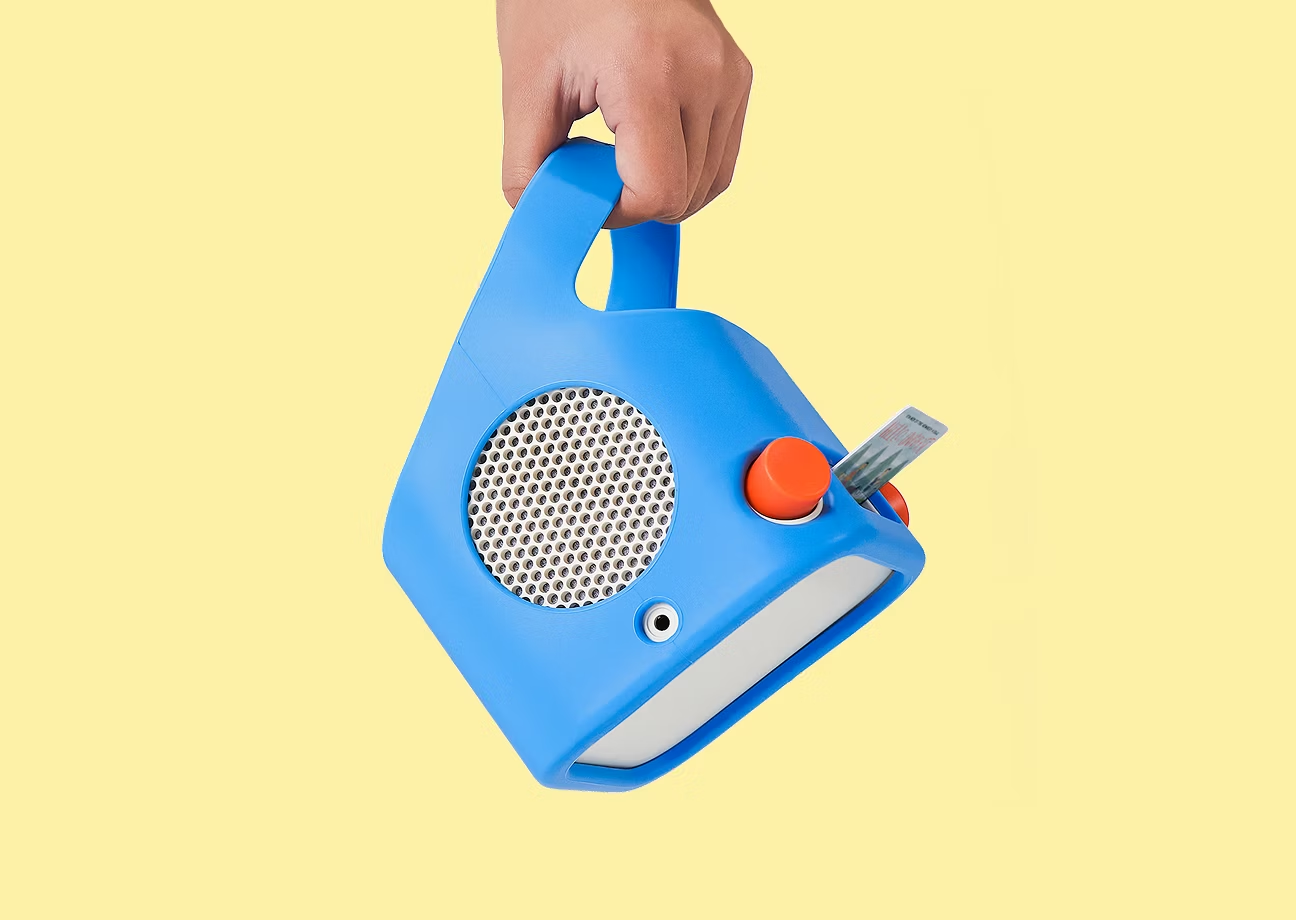
Who it’s best for: Families who want the most complete Yoto experience at home.
Top 3 key features:
One honest drawback: Bigger and less travel-friendly than the Mini.
Mini verdict: The best overall Yoto device for bedrooms, routines, and everyday listening.
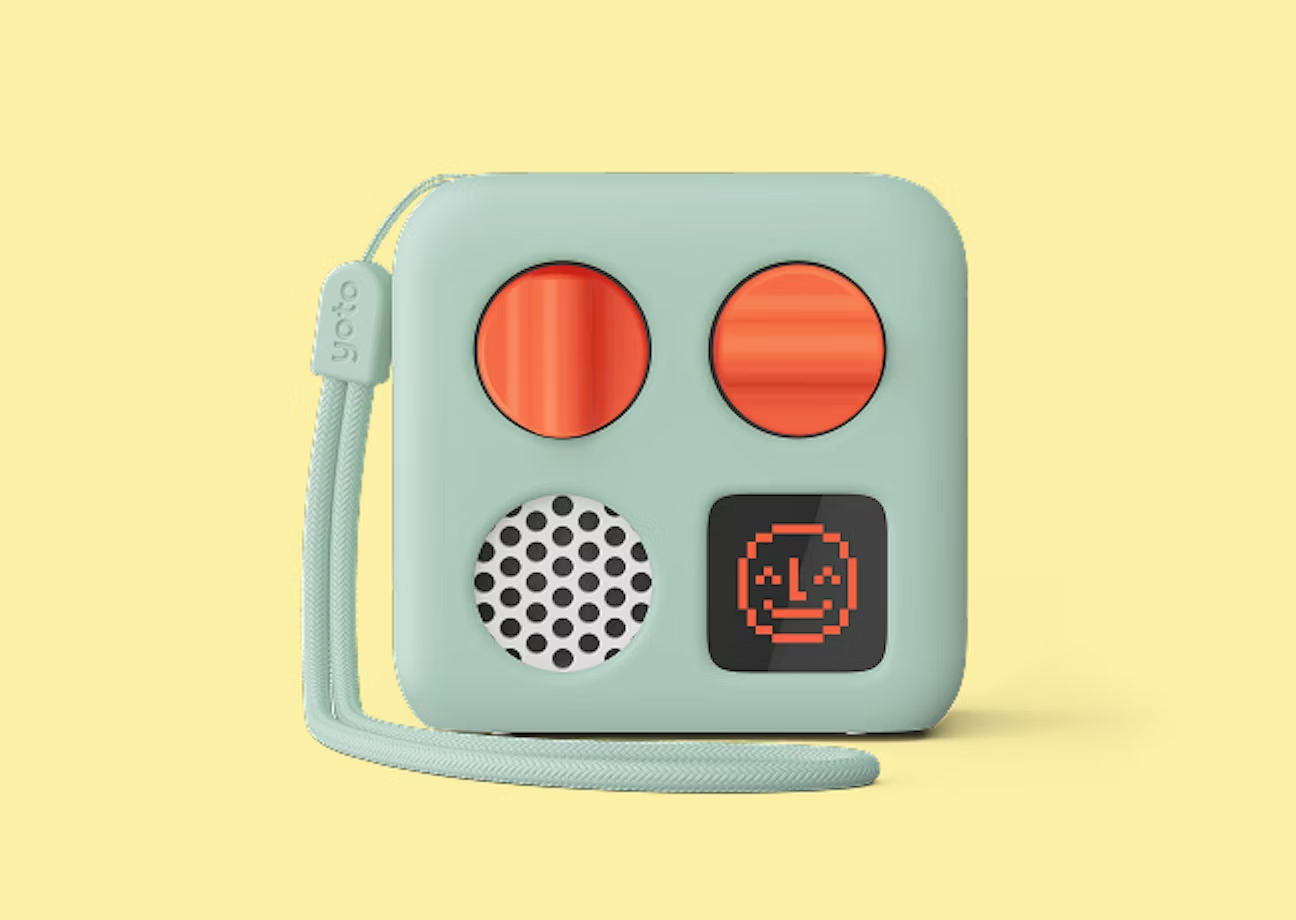
Who it’s best for: Travel, car rides, shared custody households, and kids who want their own portable player.
Top 3 key features:
One honest drawback: The smaller speaker is less room-filling than the full-size Player.
Mini verdict: The easier recommendation for families who need audio on the go.
Who it’s best for: Families who want to create custom content, grandparent recordings, playlists, or podcast cards.
Top 3 key features:
One honest drawback: You only get the full value if you actually use the custom-content feature.
Mini verdict: One of the smartest things in the whole Yoto ecosystem.
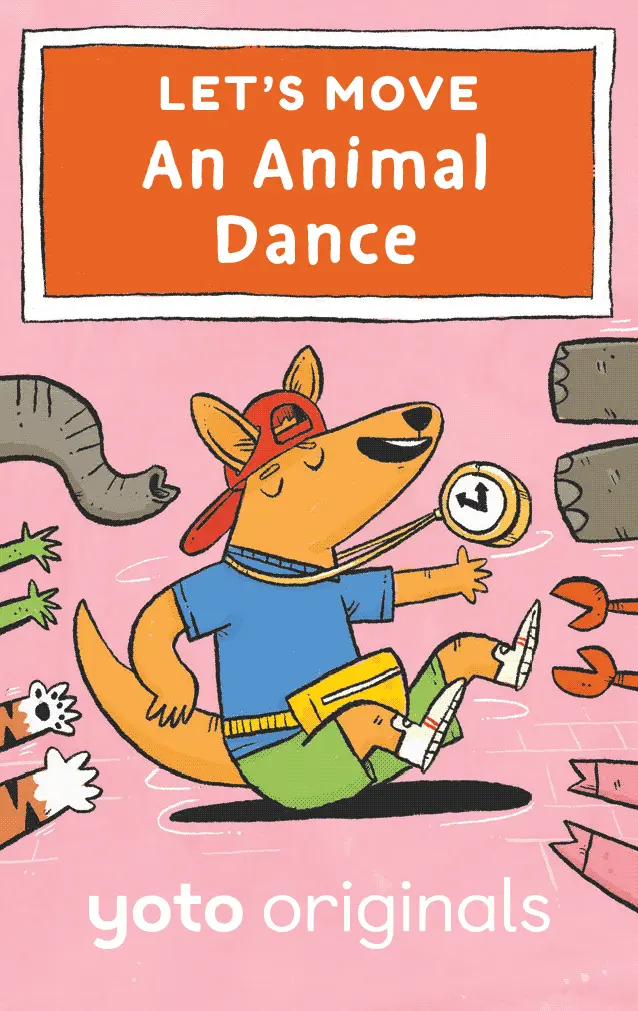
Who it’s best for: New Yoto families with preschool-age children.
Top 3 key features:
One honest drawback: Less useful if your child is already outgrowing preschool-style content.
Mini verdict: A sensible add-on for getting younger kids started quickly.
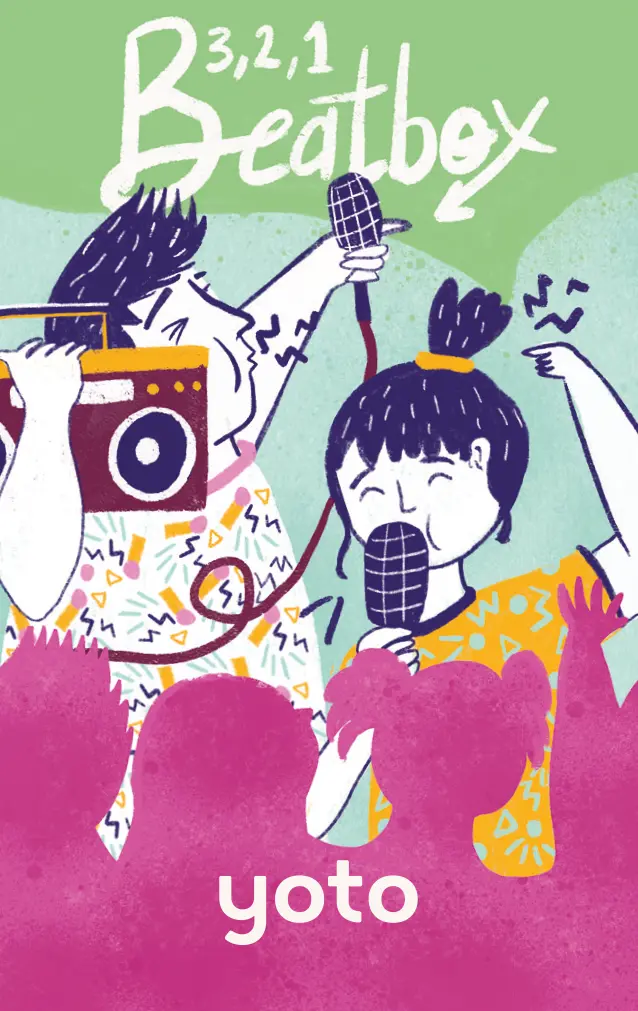
Who it’s best for: Early readers and school-age kids who want a broader mix of stories, quizzes, and activities.
Top 3 key features:
One honest drawback: Older children with very specific tastes may outgrow a sampler pack quickly.
Mini verdict: A smart first content purchase if you are skipping the toddler years and buying Yoto later.
Customer sentiment is mostly positive, with some clear weak spots. On Trustpilot, Yoto currently shows a 4.3 rating based on roughly 39K reviews, and recent reviewers frequently praise the concept, the independence it gives kids, and responsive replacement support when something goes wrong.
The strongest themes are product usefulness and customer service. Many customers say their children use Yoto daily, that it helps with bedtime or quiet time, and that the company can be responsive when devices or cards need troubleshooting.
The most common negative themes are shipping and occasional hardware or card issues. Trustpilot’s review summary specifically mentions delivery delays, lack of tracking in some cases, and some reports of product problems like cards not reading or battery concerns.
Paraphrased customer sentiment examples:
Yes. Yoto is a legitimate company with a long-running official store, published guarantee and refund policies, a substantial content library, a formal safety page, and a clearly documented Yoto Mini battery replacement program for affected older units. It is not hard to verify that this is an established kids’ audio platform rather than a novelty gadget brand.
For many families, yes.
Yoto is worth it if you want a screen-free system that can handle stories, music, sleep sounds, podcasts, and custom content in a way children can actually manage themselves. It is especially good for parents who want independent listening without ads or voice-assistant dependence.
What to look for before you buy:
Yoto and Tonies target the same broad problem—screen-free listening—but they solve it differently. Yoto uses cards, a pixel display, and a more expandable audio-platform feel. Tonies uses figurines, a softer toy-first identity, and now the Toniebox 2 plus Tonieplay games. Tonies also offers a more generous 100-Day Happiness Guarantee on Starter Sets and Bundles, while Yoto’s legal refund policy is shorter.
| Category | Yoto | Tonies | Who Wins |
|---|---|---|---|
| Best for older kids | Stronger long-term feel, especially with cards and app features | More toddler/early-childhood toy energy | Yoto |
| Best for younger kids | Good, but less toy-like | Very approachable, figurine-based interaction | Tonies |
| Custom content | Make Your Own cards are a major advantage | More limited in feel | Yoto |
| Trial/return confidence | Shorter, more mixed official return language | 100-day Happiness Guarantee on starter sets/bundles | Tonies |
| Travel | Yoto Mini is a standout portable option | Toniebox is portable, but bulkier | Yoto |
Yoto’s official site currently advertises free shipping on orders over $40, Bundle & Save 10%, and Yoto Club memberships from $4.99/month with discounted card buying and app content. Product pages also mention installment payment options through Klarna.
You can buy directly from Yoto’s official site, which is where the players, cards, accessories, bundles, and Yoto Club are all sold. Yoto also has a stockist page for retail availability.
Overall, yes. Yoto’s strengths are real, especially for independence, bedtime routines, and travel.
It can be, but it feels strongest from preschool onward. Tonies may feel more toy-like for very young listeners, while Yoto grows better into older childhood.
Yoto Player is bigger and better for home use, with stereo sound, a room thermometer, and up to 24 hours of battery. Yoto Mini is smaller, more portable, and lasts up to 14 hours per charge.
No, but Yoto Club can make the ecosystem cheaper and more useful if you plan to buy lots of cards.
Yes. Yoto explicitly says its current players have no microphone, no camera, and no ads.
They are not outrageous individually, but the overall library cost adds up if you buy many titles over time.
Yes. Yoto’s Make Your Own cards can be linked to recordings, MP3s, podcasts, radio, and certain app content.
Yes. The Yoto Mini is one of the brand’s strongest products for travel, car rides, and headphones-based listening.
Yes. The general product guarantee is 24 months, and memory storage issues are covered for 48 months.
Only that older 2021–2023 units are part of an official battery replacement program, so used-device buyers should check the version carefully.
Yoto works because it is not just a cute gadget. It is a thoughtfully designed audio platform that gives kids real independence without needing a screen, a voice assistant, or an adult constantly managing the experience. The devices are good, the content model is strong, and Make Your Own is a real long-term differentiator.